
_________________________________________
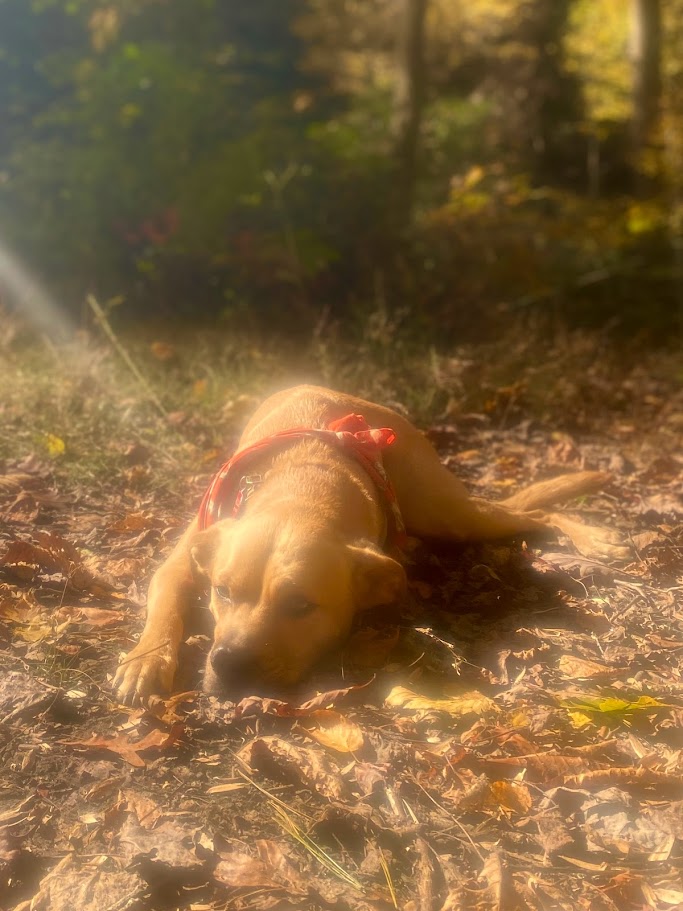
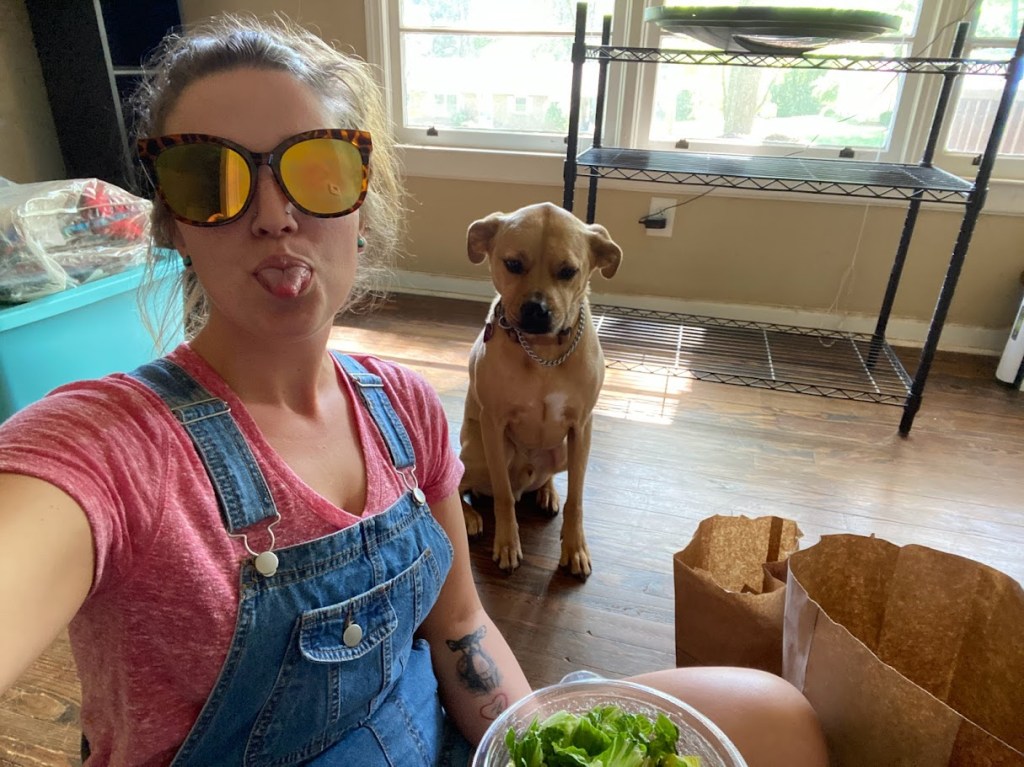
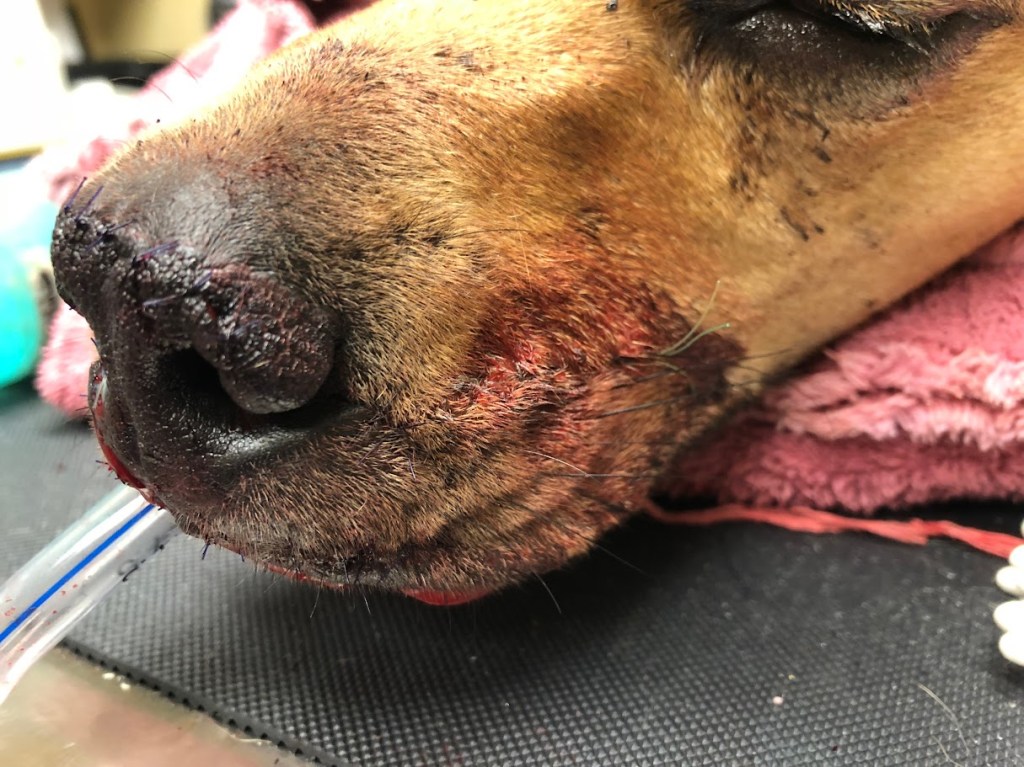
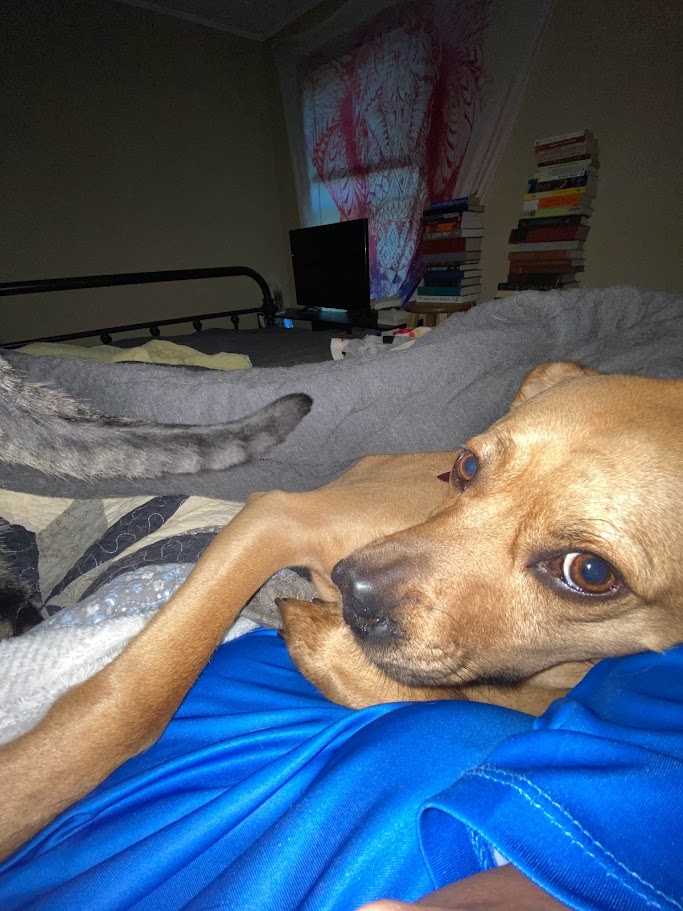
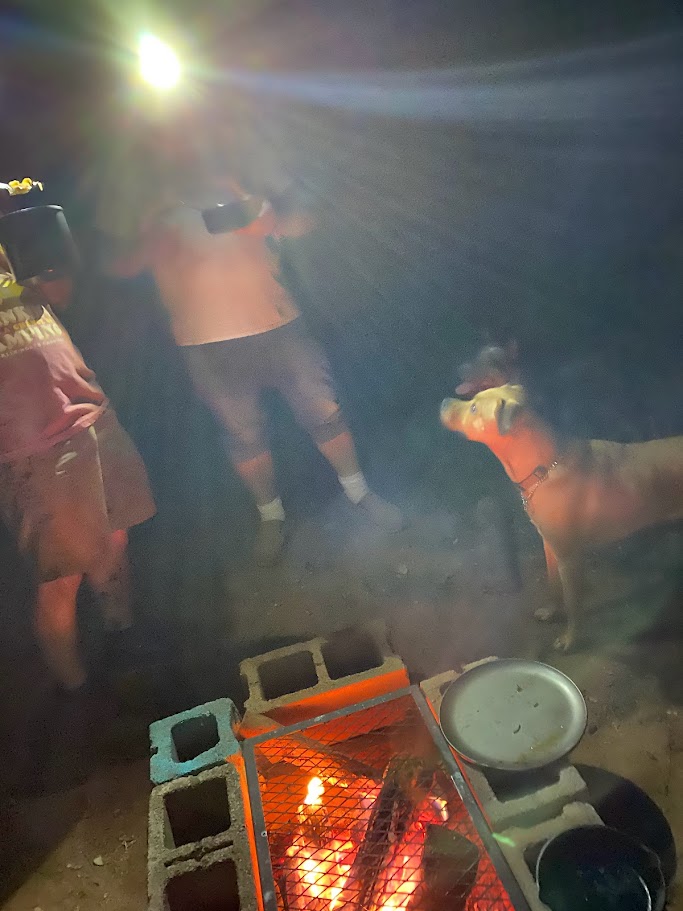
Photo Disclaimer: Several photos of Walle accompany this story. One image shows him after rhinoplasty surgery and may be graphic in nature. While I have many photos documenting his journey, I’ve chosen to share the gentlest images that non-animal people can tolerate while still honoring the reality of what he survived.
Author’s Note: Location names have been altered for narrative purposes. However, Johnny’s name remains unchanged, as it reflects my authentic experience.
_________________________________________
Chapter One: The Hollow After Healing
Recovery from gallbladder surgery whispers promises of simplicity—six weeks of gentle existence, then resurrection into the life you once knew. Yet three months beyond the surgeon’s blade, I found myself haunting my own home, studying the avalanche of medical bills that had transformed my financial stability into something fragile as spun glass. The pain had departed, but it left behind a different kind of ache—the hollow echo of a woman who no longer recognized her reflection.
My desk at Mattress Firm had become a monument to suffering, each hour in that unforgiving chair a reminder of the months I had endured, convinced my agony was weakness disguised as drama. The fluorescent lights hummed their indifferent song while I counted minutes like a prisoner marking days on cell walls. I needed something beyond survival. Something that carried meaning in its arms like a mother carries her child.
I had always possessed an uncommon fluency with wounded creatures. Growing up on a farm teaches you to read pain in the set of shoulders, in the way breath catches between ribs, in the silence that speaks louder than any cry. When the job posting for Paws and Claws veterinary clinic appeared before me like an answered prayer, something dormant in my chest stirred—the first flutter of possibility in months of gray existence.
Perhaps this was destiny disguised as opportunity. Perhaps I could finally transform my suffering into a bridge toward healing others.
Chapter Two: The Theater of Broken Souls
Johnny hired me with the enthusiasm of a man collecting disciples rather than employees, his focus lingering strangely on my missionary background rather than my qualifications. This should have been revelation enough, but hope has a way of painting red flags in softer hues.
What I discovered in the days that followed was a masterpiece of deception—a clinic where Scientology masqueraded as Christianity, where morning devotions served as prelude to Johnny’s afternoon inquisitions. This ex-marine from New York possessed a particular talent for cruelty, gathering the female veterinary technicians in his office like a general assembling soldiers, then unleashing torrents of profanity that left us feeling smaller than the animals we tended.
The female veterinarian who owned this house of healing kept her distance, floating through our chaos like a ghost unwilling to acknowledge her haunting. Whispers followed her movements—rumors of entanglement with Johnny that no one dared voice above a murmur. I should have listened to the technician who looked into my eyes on that first day and spoke with the urgency of someone throwing a lifeline: “Do not work here.” She disappeared after lunch that day, leaving behind only the echo of her warning and the wisdom I was too desperate to heed.
In my second week within that carnival of dysfunction, they carried him through our doors like a broken prayer.
Chapter Three: The Golden Ghost
The intake form bore the sanitized lie of “car accident,” but truth has its language, and I was fluent in the dialect of deliberate cruelty. No vehicle creates wounds with such precision, such intimate malice. His nose hung from his face by threads of tissue and stubborn hope, while burn marks dotted his back like a constellation mapped by someone’s rage. Beneath the blood and dirt, gold shimmered—the color of wheat fields and summer afternoons and all the gentle things this world had tried to steal from him.
Terror had transformed his eyes into empty windows, reflecting nothing but the endless winter of betrayal.
“What’s his name?” I asked the veterinarian, though some part of me already understood that names, like trust, could become weapons in the wrong hands.
“Buddy,” she replied, her voice carrying the weight of unspoken sorrows. “Though he doesn’t respond well to it.”
Understatement lived in those words like poison in pretty bottles. The mere sound of those syllables sent him spiraling into trembling panic, as if his given name carried echoes of the hell he had barely escaped.
The truth emerged in fragments over the following days, extracted piece by piece through Johnny’s interrogation of the young couple who had delivered this broken angel to our door. They were serious drug addicts dancing with demons I couldn’t imagine, and the boyfriend had grown jealous—jealous of the pure love his girlfriend gave to this innocent creature. So he journeyed to the neighbor’s house, selected a machete like a painter choosing brushes, and attempted murder with the casual cruelty of swatting flies.
The weapon missed its intended target—death—but left its signature nonetheless. The handle bore a hole into the dog’s skull while the blade carved his nose cleanly in half, creating a wound that would whistle with each breath for the rest of his days.
This golden boy—though dirt and trauma had painted him brown as autumn earth—arrived severely emaciated, aggressive in the way that only the deeply betrayed can be. Cigar burns decorated his back like terrible medals of honor, not the small wounds of carelessness but large, deliberate craters of calculated pain. He required heavy sedation for multiple rhinoplasty surgeries, and I became the primary technician capable of handling him, though we were blessed with other skilled hands as well.
For weeks, he endured procedures that would challenge the strongest among us—rhinoplasty surgeries and cartelization of internal nostrils, interventions so agonizing that he would wake screaming before consciousness fully claimed him. Confined to a single kennel, denied even the dignity of stepping outside to relieve himself due to his medications and fragile health, he existed in a prison smaller than his suffering.
It was agony to witness this daily resurrection of pain.
On a Thursday afternoon thick with autumn light, while returning him to his kennel after treatment, his teeth found my arm with the desperate precision of someone who had learned that trust was simply betrayal wearing a kinder mask. The scar remains with me still—not a badge of his violence, but a testament to his terror.
The bite carried no malice, only the frantic message of a soul who had loved once and nearly died for the privilege: I will never allow you to hurt me again.
“That dog is dangerous,” the veterinarian pronounced, examining my bandaged arm with clinical detachment. “Perhaps we should discuss other options.”
“He’s not dangerous,” I replied, my voice carrying certainties I didn’t know I possessed. “He’s protecting himself. There’s a universe of difference.”
She regarded me with the expression reserved for those who have lost their grip on reality, but something in his eyes during that moment of contact—pure fear wearing the mask of aggression—whispered that he was worth every risk, every scar, every moment of faith.
_________________________________________
Chapter Four: The Moment Heaven Touched Earth
Eventually, healing worked its quiet miracle enough that we could walk him through the clinic on a leash. During one of these gentle expeditions, the clinic owner made an observation that lodged itself in my heart like a splinter of truth: “Look at that dog and look at how he regards you. He loves you beyond measure.”
Of course he did, I thought with the casual confidence of someone who had spent a lifetime in conversation with wounded creatures. I had trained dogs for years, groomed them, learned their languages and their secrets. I understood the cardinal rule: never allow attachment to bloom, especially when home already housed four other souls depending on my love.
But that evening, the universe rewrote all my careful rules.
I was returning him to his kennel after our routine walk, following the protocol that had become sacred: lead him in head-first so his movements remained visible, slip the leash with practiced efficiency, step back quickly into safety. But exhaustion from the day’s trials made me careless, and instead of retreating immediately, I bent to retrieve his food bowl that seemed trapped in the corner.
In that moment of vulnerability, this dog—this creature who had already marked my arm with his desperate plea for distance—executed a complete transformation in the space between heartbeats. Time crystallized into something precious and breakable as we found ourselves face to face, eye to eye, breath mingling with breath.
This is where I die, I thought with strange calm. This is where he takes my face as payment for all the cruelty humans have taught him.
I had worked with the hardest of dogs—Malinois with lightning reflexes, German Shepherds trained for war, police dogs who knew violence as their native language. I had been schooled in dominance-based methods that relied on shock collars and helicopter corrections, training that demanded submission through fear. I was a disciplinarian who permitted no transgression, no weakness, no room for negotiation.
And in that fluorescent-lit kennel, with the sound of other creatures settling into the rhythm of evening around us, I prepared to receive the justice I perhaps deserved for representing a species that had shown him nothing but cruelty.
What happened next transformed my understanding of every true thing I thought I knew about love, about forgiveness, about the possibility of grace in a world gone wrong.
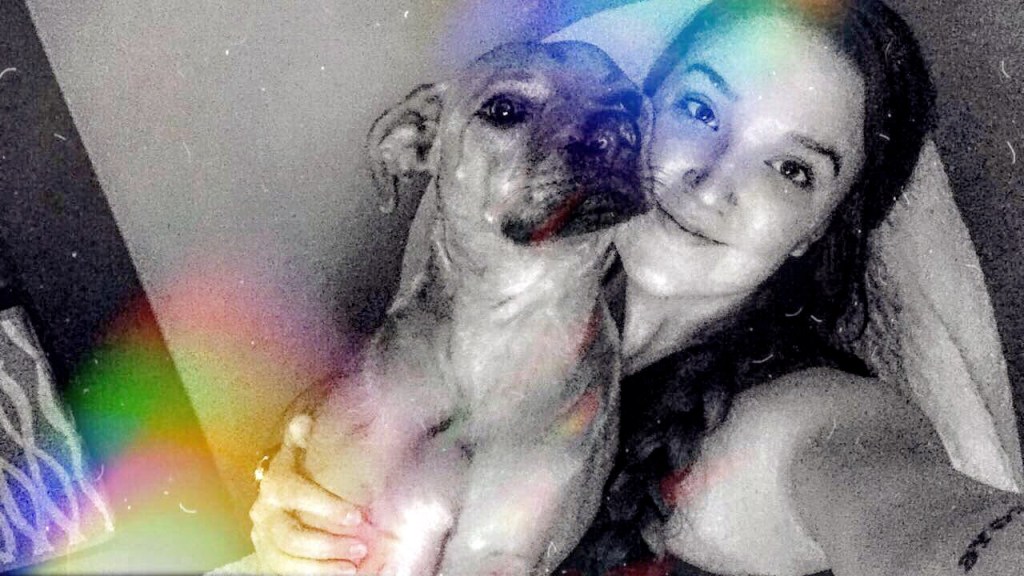
This dog—this broken, tortured, betrayed angel—looked into my eyes and saw something I couldn’t see in myself. Then he did something that defied every law of self-preservation, every lesson pain had carved into his bones. He rose on his hind legs, placed one paw on each of my shoulders with the gentleness of a mother touching her sleeping child, and pulled me into an embrace that rewrote both our destinies.
He held me like humans hold each other in moments of profound recognition—his scarred head resting against my shoulder, his reconstructed nose pressed against my neck, his body communicating what words could never contain. Time stopped breathing. The world stopped spinning. In that kennel that smelled of antiseptic and hope, with this creature who had every justification for hatred, I learned that love really can triumph over every betrayal, every wound, every reason to give up on the goodness hiding in other hearts.
“Oh,” I whispered into his golden fur, and it was the only word vast enough to hold the magnitude of what was happening between us.
When I finally pulled away, tears carving rivers down my cheeks, his tail moved in a single, tentative wag—testing whether joy was still permitted in a world that had taught him to fear everything beautiful.
Chapter Five: The Claiming
Two weeks later, an older woman arrived seeking a companion among our adoptable souls. With my heart hammering against my ribs like a caged bird desperate for freedom, I led her to his kennel. The moment her gaze fell upon his reconstructed face, the first words that escaped her lips were: “Will his nose ever be fixed?”
The rage that ignited in my soul burned with the intensity of a thousand suns. You understand nothing, I thought with fierce protectiveness. You cannot comprehend the journey this angel has traveled, the hell he has survived, the grace he embodies. His nose is a masterpiece of survival, and if you cannot see the beauty in his scars, then you are blind to everything that matters.
“His face is perfect,” I told her with quiet steel in my voice. “If you cannot see that truth, then you are not worthy of him.”
She departed quickly, her absence a gift I hadn’t known I was hoping for.
“I want to adopt him,” I announced to the veterinarian that afternoon, my words carrying the weight of destiny.
“The one who bit you?”
“The one who chose to trust me.”
Chapter Six: Learning to Live Again
Taking him home felt like ushering a ghost into the land of the living. He crossed my threshold with the careful steps of someone testing whether safety could be real, then claimed my couch with the dignity of a king ascending his throne. He christened one of my blankets with a single accident—the only time in seven years that such a thing would happen, except for the final day when death loosened his careful control.
I couldn’t bear to call him Buddy—that name carried too much trauma in its syllables, too many echoes of the hell he had survived. For days, I watched him shadow my movements through the house like a spirit learning to trust the light. He followed me from room to room with the devotion of someone who had found his religion in the simple act of not being alone.
When the clinic finally permitted his adoption—after demanding the full fee despite my months of caring for him, their resentment as transparent as morning frost—I held the papers like sacred text and whispered the name that had been waiting in my heart: “Wall-E.”
His ears lifted slightly, golden antennae tuned to the frequency of new beginnings, and I knew with absolute certainty that he approved.
Chapter Seven: The University of Broken Things
What followed challenged every assumption I had built about healing, about training, about the fundamental nature of trust between species. I arrived at his recovery with the confidence of someone who had mastered the language of difficult dogs—military training, police work, drug detection, cadaver searches, protection work with Malinois and German Shepherds. I had shaped service dogs for veterans carrying invisible wounds, and had worked my way from the bottom to the pinnacle of professional dog training. Yet every technique I had mastered, every method I had perfected, crumbled like ancient parchment in the face of his particular brokenness.
Direct eye contact sent him into complete systemic shutdown—even the gentlest gaze would trigger panic attacks that left him trembling beneath my bed, hyperventilating like someone drowning in memories. Commands, no matter how softly delivered, launched him into terror responses that could last for hours. Even his new name, spoken with anything resembling authority, would send him spiraling into trembling that persisted through entire nights.
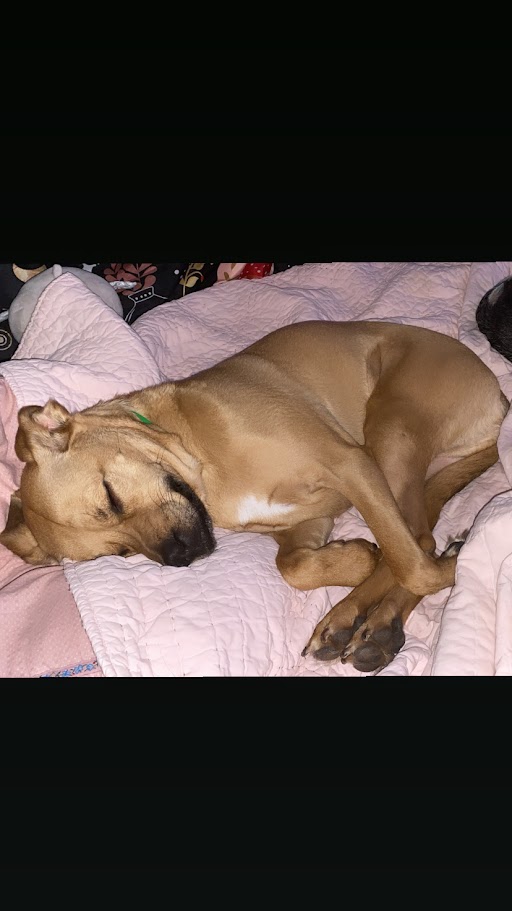
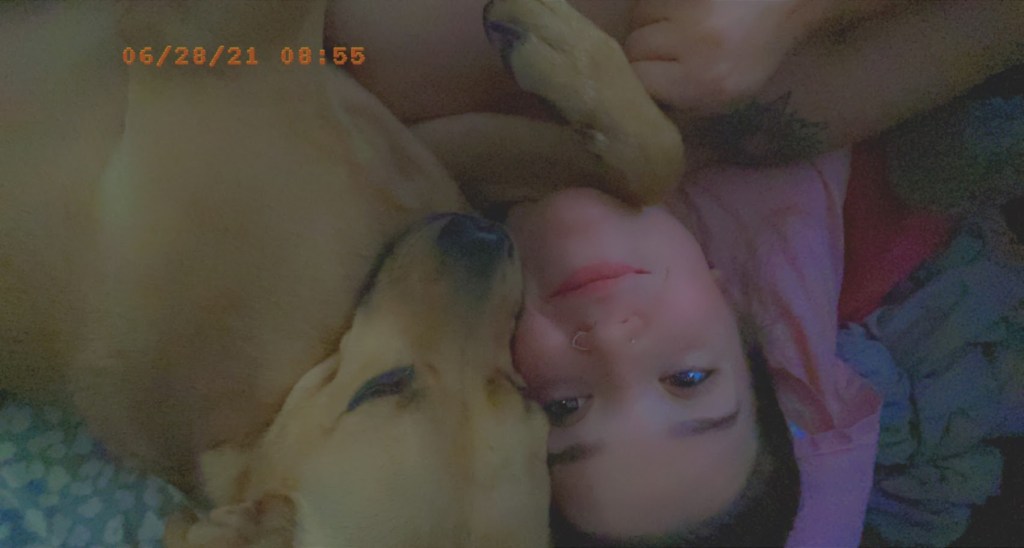
For two full years, he possessed no capacity for anything beyond shadowing my existence. He wouldn’t sit, wouldn’t lie down on command, wouldn’t perform any of the basic behaviors that define the relationship between human and canine. He simply followed me through my house like a gentle ghost, sleeping pressed against my shoulder with his head draped across my neck—all thirty-five to forty-five pounds of him seeking comfort in the rhythm of my breathing.
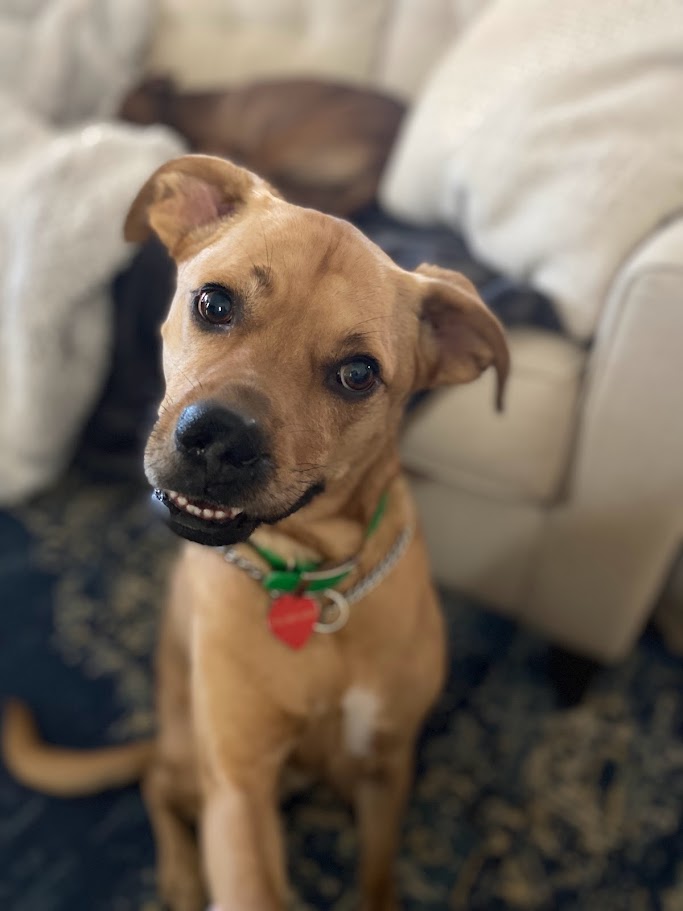
He was growing into himself during these healing years—long legs elegant as a boxer’s, deep chest expanding with each careful breath, square head softened by the deformation his trauma had created. His coat transformed into silk the color of summer wheat, beautiful and soft as morning light. The burn marks remained on his back like terrible constellations, permanent reminders of cruelty survived. We joked that we had missed our chance to call him Lil Weezy because of the distinctive whistle his reconstructed nose created with every breath.
I discovered patience I never knew lived within me. When I needed him to move from doorways, I would sing “Move along little doggy, move along” from some half-remembered Western song, because speaking his name directly or issuing any command would shut him down completely for the remainder of the night.
This was where my education began in earnest—not in the methods I had learned, but in the complete abandonment of everything I thought I knew about healing traumatized souls. I had worked with abused dogs before, but this transcended every category I understood. This dog became my teacher in the sacred art of breathing through storms.
During my panic attacks—remnants of the medical trauma that had brought me to that clinic in the first place—I would close my eyes and synchronize my breath with his distinctive rhythm. Even his breathing carried the music of survival, that whistle and wheeze from his reconstructed nose creating sounds like gentle snoring. To this day, I can summon the exact cadence of those inhales and exhales, can feel the way my chest would rise and fall in harmony with his until calm returned to my scattered system.
He taught me, literally and metaphorically, how to breathe through the aftermath of breaking.
After several years of this patient education, we achieved a breakthrough that felt like watching someone step from darkness into dawn. He learned that we could venture into the world together—rides in the car, walks in public spaces, adventures wherever our spirits called us. I became his person, and he became mine, with a completeness that defied every boundary I had previously understood.
From that moment in the clinic kennel when he chose to embrace rather than destroy, I never witnessed a single sign of aggression toward another soul. It was as if, in that fluorescent-lit instant of decision, he had appointed me as his safe harbor in a dangerous world, trusting that I would never use his love as a weapon against him.
Years passed, and my trust in him became absolute. I genuinely believed I could place him in a room full of children and he would do nothing but offer comfort and gentle affection. He eventually mastered full obedience, but everything required time measured in seasons rather than days—years of daily practice simply helping him grow comfortable existing in his own beautifully scarred skin.
When I decided to sell my house and embrace nomadic life in a camper, I had to begin preparing him a full year in advance, gradually accustoming him to sitting peacefully in the vehicle. Five years later, he could settle into the car and sleep like a trusting child. Everything moved at the pace of deep healing with this dog. Everything demanded proof, required demonstrations of loyalty and kindness that could only be earned through time.
Chapter Eight: The Ripple Effect of Radical Love
Through Walle’s patient teaching, I began approaching the entire world through different eyes. I started recognizing the walking wounded among us—those who flinched at loud voices, who maintained walls where bridges should stand, who seemed impossible to reach not because they were difficult, but because they had learned that vulnerability was simply an invitation to pain.
Instead of judging their defensiveness, I remembered my dog’s journey from terror to trust, and I began responding to human brokenness with the same gentle persistence he had required.
At work, when frustrated pet owners unleashed their anxiety on our front desk staff, I thought of Walle’s early days and chose tenderness over irritation. When friends complained about family members who seemed beyond reach, I shared what I had learned about meeting someone exactly in the space where they exist, without demanding they become something different to earn love.
“You’ve grown softer,” my friend Kenny observed during one of our conversations, “but somehow stronger too.”
His words carried truth I was only beginning to understand. Walle had taught me that the people who seem most difficult to love are frequently those who need it most desperately. That patience isn’t passive acceptance—it’s revolutionary action. That sometimes the most powerful thing we can offer another soul is simply to show up, day after day, without demands or conditions.
My approach to relationships transformed entirely. I found myself drawn to depth over surface charm, to people who had been tested by life’s fires and emerged bearing scars that told stories of survival. Superficial attractions felt hollow compared to the quiet strength I had learned to recognize in those who had fought their way back to the possibility of trust.
Chapter Nine: Seven Years of Daily Grace
We were blessed with seven years together—seven years of morning walks where he investigated every tree as if it held the secrets of the universe. Seven years of homecoming greetings that made my eight-hour absence feel like decades of separation. Seven years of watching him choose joy again and again, despite everything the world had taught him about the dangers of hope.
He never completely shed his quirks, those beautiful evidences of survival. Sudden movements still made him pause; certain sounds would send him seeking the comfort of my presence. But the raw terror had transformed into gentle caution, and that caution had softened into trust so complete it took my breath away.
Strangers would meet him and immediately sense something extraordinary in his presence. “He’s special, isn’t he?” they would say, drawn to the indefinable quality that radiated from his being.
“Yes,” I would always answer, my voice carrying the weight of witnessed miracles. “He survived the worst humanity could offer and chose to love anyway.”
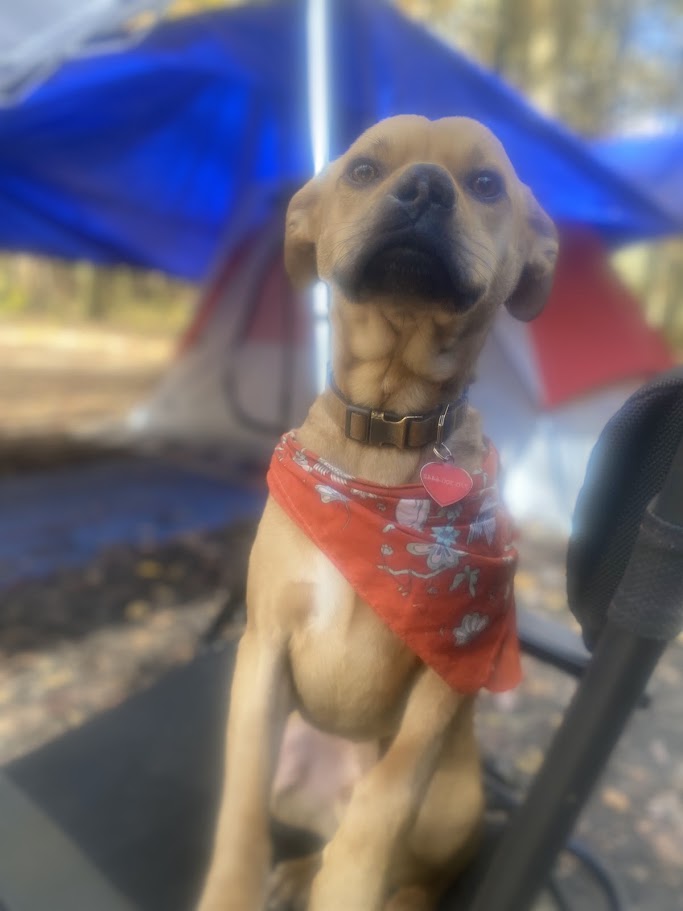
Chapter Ten: The Final Teaching
He departed this world in 2024, leaving behind a mystery we never solved. The illness arrived like a thief on a Friday evening—sudden breathing difficulties that resembled an upper respiratory infection but defied every pattern we knew. He was an older dog by then, but his symptoms painted no clear picture of what was stealing his strength.
Friday night brought complete immobilization. We quarantined him in the bathroom away from our other dogs and administered high doses of medication, hoping to counteract whatever force was claiming him. Saturday passed without food or water touching his lips, his breathing labored, his body too weak to support even the simple act of walking. I spoke with veterinarians, planning emergency trips to the university in Georgia, renowned for its veterinary miracles.
Sunday morning arrived with our bags packed and our hearts prepared for the journey to save him. But with the last reserves of his failing strength, he walked from the bathroom, collapsed on the floor, and lost control of his bladder—something that had happened only once before in our seven years together, on that first day when trauma still ruled his body.
I believe, with every fiber of my being, that he was trying to go outside, trying even in his dying moments to honor the trust we had built, the respect he had learned to have for our shared home.
I drove him to the emergency clinic with tears streaming down my face and love pouring from my heart like water from a broken dam. Dr. Patterson, who had witnessed our journey through the years, helped us navigate those final sacred moments. Walle passed peacefully, his head resting in my lap, my fingers woven through his silk-soft fur, surrounded by the life we had created together.
“Thank you,” I whispered as his distinctive breathing finally stilled. “Thank you for teaching me that broken doesn’t mean worthless.”
The grief was oceanic in its depth, but so was the gratitude. This dog had saved my life not through dramatic heroics, but through the daily choice to love despite possessing every reason to hate. He had shown me that healing happens in moments so small they’re nearly invisible, that trust is built one breath at a time, that the most profound beauty lives in the spaces where someone has been shattered and chosen to piece themselves back together with gold.
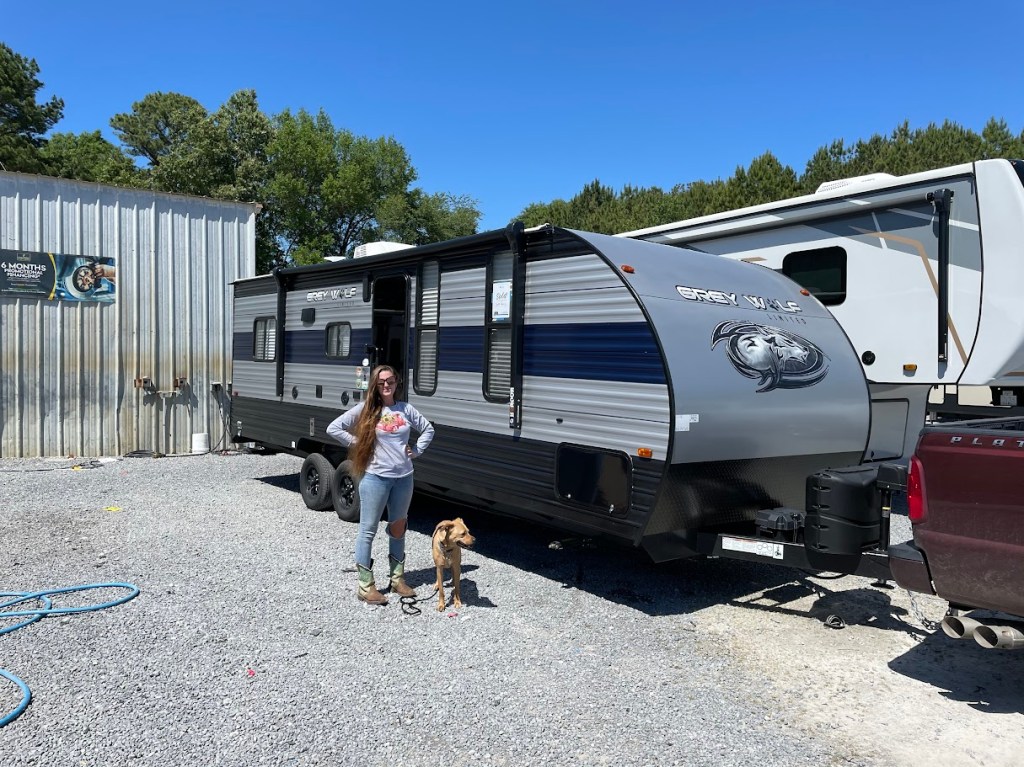
Chapter Eleven: The Living Legacy
The absence of his gentle snoring has created a different kind of music in my home now—not the hollow echo of emptiness, but a quiet reverence for everything he left woven into the fabric of my being. His wisdom flows through my days like water finding its natural course, reshaping how I move through a world that suddenly makes deeper sense because of what he taught me.
When I encounter someone who flinches at kindness or builds fortifications where bridges should span, I see him in that kennel again—trembling, broken, certain that trust was simply betrayal wearing a more attractive mask. I remember that it required two full years for him to believe that gentle voices wouldn’t turn sharp, that loving hands wouldn’t transform into weapons of harm. Now I approach the wounded and wary with the same patient tenderness he required, understanding that some hearts need seasons, not moments, to unfold their hidden treasures.
There’s something I’ve come to understand about dogs like Walle, about love that runs deeper than the marrow of our bones: when they slip from this world into whatever glory awaits beyond the veil that separates the seen from the unseen, they step into perfect wholeness—every scar transformed into light, every wound healed by hands gentler than we can imagine, every moment of suffering transmuted into pure radiance that speaks the language of redemption.
And here lies the mystery that comforts my grieving heart like a lullaby sung by angels: in heaven’s timeless realm, where minutes and years hold no meaning, they experience only the briefest pause—a single heartbeat, one intake of eternal breath—before we join them in that place where separation is revealed as illusion and reunion as the only truth that ever mattered.
Their love doesn’t count days or mark calendars. It simply waits with the patience of eternity itself, knowing that what feels like years of missing them to our earthbound hearts is merely the space between lightning and thunder to souls who have stepped into forever.
Until that moment when I see those golden eyes again, shining with the light of someone who remembers everything and forgives it all, I carry his spirit in every choice to respond with compassion instead of judgment, gentleness instead of force. He proved that the most broken among us often possess the greatest capacity for forgiveness, that healing remains possible for anyone brave enough to risk hope one more time, and that sometimes the most sacred gift we can offer another soul is simply to breathe alongside them until the storm passes and the sun remembers how to shine.
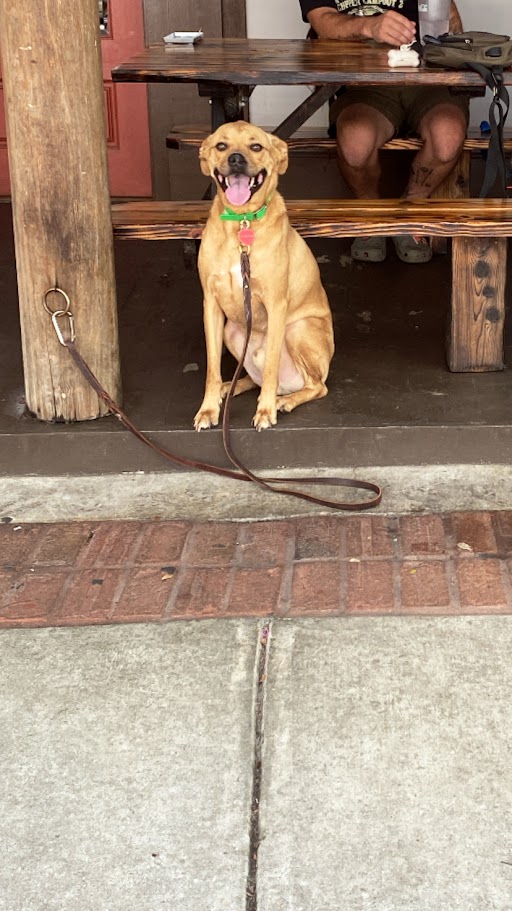
Epilogue: Why Walle
In all the years I’ve shared fragments of our story with others, no one has ever asked me the question that matters most: why that name? Why did I choose those particular syllables to carry the weight of his new beginning? Perhaps it’s because the reason lives so deep in the poetry of our connection that words seemed inadequate—until now.
The truth is, I knew from the moment I whispered “Walle” into the quiet space between us exactly why that name belonged to him. It wasn’t coincidence or whim that guided my choice. It was recognition—the soul-deep understanding that his journey mirrored something I had witnessed before, something beautiful and heartbreaking and ultimately triumphant.
You see, my Walle was the living embodiment of that small, tireless robot who spent his days sorting through humanity’s abandoned waste, finding treasures where others saw only refuse. Like his cinematic namesake, my boy had emerged from the wreckage of human cruelty—not literal garbage, but the emotional debris left by those who had forgotten how to love without destroying. He had been discarded, tortured, and left for dead in every way that mattered. Yet somehow, impossibly, he retained the capacity to find hope in the smallest gestures of tenderness.
Just as WALL-E collected his precious artifacts—a plant, a spork, a Rubik’s cube—my Walle became a curator of miracles. He gathered gentle touches like rare gems, kind words like sacred relics, moments of safety like priceless treasures. Each day with me became another artifact in his collection, replacing the museum of horrors his previous life had created. He taught me to see the extraordinary hidden within the ordinary: the way morning sunlight could heal yesterday’s wounds, how the simple act of breathing together could rebuild shattered trust, why patience wasn’t just a virtue but a form of prayer made manifest.
But it was the love story that sealed his name’s destiny. WALL-E’s unwavering devotion to EVE transcended every logical boundary—distance, danger, and even space’s vastness couldn’t diminish his pure, relentless love. My Walle possessed that same quality of devotion, that same impossible capacity for faith in the face of betrayal. After experiencing the worst of human nature, after learning that hands could hurt and voices could wound, he still chose to love with a completeness that defied every rational thought.
In that fluorescent-lit kennel, when he could have destroyed me with justified rage, he pulled me into an embrace that rewrote our stories. He became my EVE, and I became his—two broken souls who found in each other the proof that love really can bloom in the wasteland, that tenderness really can triumph over cruelty, that sometimes the most extraordinary transformations begin when someone is brave enough to see treasure where others see only trash.
My beautiful boy carried his name like a prophecy fulfilled. He was exactly what WALL-E taught us to believe in: that the smallest among us often possess the largest hearts, that love is indeed the ultimate act of creation, and that even in a world gone wrong, hope survives in the most unexpected places, growing stronger in the darkness until it becomes a light that can guide others home.
When people ask me now why I named him Walle, I tell them this: because he proved that broken doesn’t mean worthless, that abandoned doesn’t mean unloved, and that sometimes the most profound healing happens when two damaged souls decide to breathe the same air and call it home.
He was my WALL-E, and I was blessed beyond measure to be his whole world—the one he collected, treasured, and loved with the pure devotion that only the truly grateful know how to give.
_________________________________________
Photo Disclaimer: The accompanying photos show Walle at various stages of his healing journey. One image captures him post-surgery and may be difficult to view. These images represent only the gentlest documentation of his experience, chosen with consideration for those who may find graphic content challenging while still honoring the truth of his survival and transformation.
_________________________________________


Leave a Reply