
Learning Disabled: My Special School
Part Two
Culture Shock
The special school only went through eighth grade. That was always the plan—intensive intervention designed to rewire your brain, then release you back into the wild. I had tools now. Strategies. A Blue Book full of sound patterns burned into my memory. Three and a half years of therapy that had literally changed the way my neurons fired.
I left eighth grade feeling something I had never felt before: smart. For the first time in my life, I wasn’t the broken kid anymore. I was ready.
Or so I thought.
I walked into a public high school for the first time in my life, and it was like stepping onto another planet.
The building was massive. Hallways color-coded—Blue Hall, Red Hall, Yellow Hall—and I had to sprint between them to make it to class on time. They called it “blocks” instead of periods. First block, second block. The schedule rotated in ways I couldn’t track.
For the first time in my life, I had a locker. A real locker, like in the movies. And I had to run to it between classes, swap out my books, and make it to the next room before the bell rang. I eventually learned it wasn’t even worth the trip. I just carried everything with me.
I rode the big yellow school bus. Picked up right at my house, dropped off at the front entrance with a hundred other kids. I ate cafeteria food—real cafeteria food, trays and mystery meat and everything. I sat in a lunchroom with over a hundred students at a time.
I came home one day and told my parents I had seen a boy and a girl kissing in the hallway. Like, actually kissing. In public. In front of everyone. They laughed at me. These were high school sweethearts, kids who had been in public school their whole lives. I was the sheltered one.
The movies had actually prepared me pretty well for the chaos—the crowds, the drama, the lockers, the bells. What I wasn’t ready for was how invisible I would become. At the special school, there were three to five kids per class. Everyone knew your name. Everyone knew your story. Here, I was one of hundreds. Thousands. I got lost in the massness of it all, and no one noticed.
I met my first real best friend there—Cara. We’d met through a church program in eighth grade, but we lived one street over from each other, which meant we rode the bus together every day. God rest her soul—she passed away in her mid-twenties. But during those high school years, she was my anchor. The one person who knew me, who saw me, in a sea of strangers.
I also met my first bully, discovered that not everyone was going to like me, and learned that wanting people to accept you isn’t enough in a school that big. It was a harsh lesson for a kid who had spent the last three years in a place where everyone was weird together.
But none of that compared to what happened in the classroom.
Feeling Dumb Again
All that progress I had made at the special school? All that confidence I had built? It started crumbling almost immediately.
The classes moved fast. The teachers didn’t stop to check if you understood—they just kept going. There were thirty kids in a room, and if you fell behind, that was your problem. No one was going to stand at a chalkboard doing figure eights with you. No one was going to ask what page in your Blue Book handled that sound pattern.
I was on my own.
And I was drowning.
The fog started rolling back in. That old familiar feeling—the one where everyone else seems to understand something that you can’t grasp, where the information enters your ears and dissolves before it reaches your brain. I had felt it my whole childhood, and I thought I had beaten it. I thought the therapy had fixed it.
But here’s the thing about rewiring: it gives you tools. It doesn’t make you neurotypical. My brain still worked differently. And in a system that wasn’t designed for brains like mine, I started slipping through the cracks again.
Math was the worst.
I would sit down at my desk in algebra class and just… fall asleep. And I’m not someone who can sleep with the lights on. I need total darkness to sleep. But my brain would shut down so completely in that classroom that I’d pass out at my desk under fluorescent lights, surrounded by thirty other students. That’s how badly I was drowning.
When I wasn’t sleeping, I was finding ways to mentally escape. I’d ask to go to the bathroom and take the long way back. I’d walk to the vending machines during class, get drinks and snacks, and take as long as I possibly could before returning to my seat. I wasn’t skipping—I was physically there, in the building, technically in class. But my brain was doing everything it could to not be present for material it couldn’t process.
And somehow, the system still found a way to make me look like the problem.
There was one teacher who would mark you absent if you weren’t in your seat when the bell rang. Not tardy—absent. I would be walking through the door as the bell rang, literally stepping into the classroom, and she’d mark me gone. This happened multiple days in a row. So now, on paper, it looked like I was skipping class. Except I wasn’t. I was there. I was just three seconds too late to my seat.
When my parents found out about the absences, I had to convince them I wasn’t lying. Again. Just like when I was a kid, swearing I didn’t remember what I had done wrong. The ADHD kid says she was in class but the record says otherwise—who are you going to believe?
I stood there in front of my mom, promising her I was actually in that class. Swearing up and down that I wouldn’t skip. That I didn’t skip. And the teachers? They were looking at both of us with dumbfounded expressions, like they couldn’t really remember either. “I mean, I can’t say for sure if she was there or not… but the record says she wasn’t.”
They had to scramble. Dig through papers. Find assignments from those specific dates with my name or signature on them to prove I had actually been in the room. My mom had to come up to the school in the middle of my class day—one of many times she’d have to do that—just to sort out a mess that wasn’t my fault.
And even after they found the proof, even after it was clear the record was wrong, I was still the one who had to defend myself. Still the one carrying the reputation of being unreliable, even when I wasn’t.
Remember Mrs. Smith? Remember how she let me change my own grades because “it didn’t really matter”? Remember how she never actually taught me the fundamentals because math wasn’t her subject?
Well, it mattered now.
I walked into ninth grade algebra without the building blocks everyone else had learned in sixth, seventh, and eighth grade. They were solving for X, and I was still trying to figure out what X even meant. The special school had given me tools for reading, for processing, for functioning—but they couldn’t give me what I had never been taught.
Mrs. Smith’s shortcuts had created gaps. And now I was falling through them.
I sat in that algebra class feeling exactly like I had felt as a kid in Ms. Knight’s second-grade classroom. Lost. Stupid. Exposed. The same shame, the same fog, the same desperate wish to disappear. All the work I had done, all the therapy, all the progress—and here I was again, the dumb kid who couldn’t keep up.
By the end of ninth grade, I had completely failed math.
That summer, I did summer school to make up for it. Going into tenth grade, there was talk of putting me in special classes. I was back in after-school tutoring, back in the cycle of remediation and catch-up that had defined my childhood.
It felt like everything I had gained was slipping away.
Halfway through tenth grade, my mom pulled me out.
Homeschool (Again)
The rest of my education—½ of tenth, eleventh, and twelfth grade—happened at home.
But this time, homeschool was different.
My mom hired a teacher from our church, a woman who became my private instructor. It wasn’t just me, either. My brother was homeschooled alongside me, so we learned together, the two of us and one teacher. That was it. No crowds. No chaos. No thirty kids in a classroom where I had to fight to keep up.
We didn’t have a rigid setup. Sometimes we worked at my mom’s workplace. Sometimes we sat at the living room table at home. The flexibility was part of what made it work. My brain didn’t have to fight against the environment anymore.
And the learning was hands-on in a way school had never been. We did environmental projects—collected recycling and took it to the local plant, learned how you could get money from cans and bottles, saw how the whole system worked from start to finish. It wasn’t abstract. It wasn’t theory. It was real, tangible, something I could touch and understand.
For the first time in my life, I thrived in education.
With one teacher who knew how I learned, with the freedom to work at my own pace, with projects that let me engage instead of just memorize—I didn’t just catch up. I got ahead.
I graduated a year early.
Let me say that again: the kid who spent her entire childhood being told she was broken, difficult, unteachable? She graduated early.
That’s also when I got my first job—fifteen years old, working at a dog grooming place. I was finally doing something I actually enjoyed, something that wasn’t about fixing what was wrong with me.
What I Know Now
Here’s what I understand in my thirties that I couldn’t have understood as a child:
I am probably somewhere on the neurodivergent spectrum. Not in a way that needs a formal diagnosis at this point—just in a way that explains everything I went through. Highly intelligent, but with low tolerance for the things neurotypical people seem to handle effortlessly.
I don’t have the capacity for small talk. Sitting in rooms full of people drains me. I want deep conversations. I want to get to the root of every problem, to understand the why behind everything.
I still take medication to manage my ADHD symptoms. It has changed shape over the years, molded and shifted as I’ve gotten older, but they’re still there. It will always be there. My brain is wired the way it’s wired.
The Truth About Being “Smart”
For most of my childhood, I believed I was stupid. The evidence was everywhere—the failing grades, the punishment, the looks on faces when I couldn’t answer a simple question.
But here’s what no one told me: I wasn’t stupid. I was actually smart. Probably too smart for my own good.
My brain didn’t struggle because it was deficient. It struggled because it worked differently. I was thinking three steps ahead when everyone else was on step one. I was seeing patterns and connections that the curriculum wasn’t designed to capture. I was asking “why” when the lesson plan only covered “what.”
The testing—all those hours of psychological evaluation—had shown it clearly. My verbal abilities were off the charts. My pattern recognition was advanced. My IQ was high. But my processing speed, my working memory, my ability to hold onto information long enough to write it down? Those were lagging behind.
It wasn’t that I couldn’t learn. It was that my brain learned differently. And the traditional education system had no idea what to do with that.
The special school understood. Mrs. T understood. When she refused to let me play dumb, when she pushed me harder than anyone had pushed me before, it wasn’t because she was cruel. It was because she knew what I was capable of. She could see the light in that little box, even when I was trying desperately to hide it.
The therapy—the figure eights, the trampolines, the Blue Book—it wasn’t about fixing something broken. It was about building bridges. Creating pathways in my brain so that my intelligence could actually get out, could actually show up on paper, could actually be seen by the world.
They rewired me. That’s the only way I can describe it. They took a brain that was misfiring and taught it new routes. They gave me tools that I still use today—thirty years later—every time I read a book, every time I organize a project, every time I sit down to write.
What the Special School Gave Me
I joke about it. “Oh yeah, I went to a special school.” I say it with sarcasm, with an eye roll, with just enough self-deprecation that people don’t know how to respond.
But if I ever get into a serious conversation about it—really serious, not the joking kind—here’s what I tell people:
That school gave me a chance at life.
Without it, I probably wouldn’t have graduated high school. I certainly wouldn’t have graduated early. I wouldn’t have become the kind of person who excels at everything she puts her hand to.
And I don’t say that to brag. I say it because the evidence is undeniable, and it still shocks me sometimes.
That first job at the dog grooming place? I became the youngest groomer in the shop. From there, I moved into veterinary work—which became my favorite job I’ve ever had. Then Farm/Kennel management. Some hospitality. Some retail. Then business consulting.
Every industry I’ve entered, I’ve been the hardest worker. I’ve been promoted the fastest. I’ve been given multiple pay raises within the same position. I’ve been moved into management almost immediately. My resume reads like a list of leadership roles: manager, chief operations manager, kennel farm manager. Over and over again.
I am known for being organized. Meticulous. Some might say OCD about details. I’m the person who creates the systems, writes the policies, trains the staff. I’m the one they call when something is broken and needs to be fixed.
But I’m also not wound tight all the time. I can chill. I can relax. I can have a good time and not make everything about productivity. The difference is that when it’s time to work, I work—and I do it well.
That’s what the rewiring gave me. Not perfection. Not a “normal” brain. But the ability to channel the way I think into something that actually produces results.
I wouldn’t have any of that without the special school. I wouldn’t have the organizational skills, the work ethic, the sheer determination that I carry now.
Every strategy I use to manage my life—the way I break down tasks, the way I process information, the way I push through when things get hard—I learned at that little house in Braselton, Georgia.
They didn’t just teach me how to read or how to do math (well, Mrs. Smith aside). They taught me how to think about the way I think. They taught me that my brain wasn’t my enemy—it was just different. And different doesn’t mean less.
My Parents
Before I thank the teachers, before I thank the therapists—I need to thank my parents.
They’re the ones who noticed something was wrong when I was still too young to have the words for it. They sat through meeting after meeting, listening to teachers list all the ways their daughter was failing. They drove me to psychologist after psychologist, sat in waiting rooms while strangers mapped my brain, and then sat through feedback sessions full of bell curves and clinical language.
They spent thousands of dollars—money they probably didn’t have—on testing, specialists, and therapies that insurance wouldn’t cover. They changed my entire diet overnight. They found the special school. They drove me an hour each way, multiple times a week, for years.
I know the early years were hard for all of us. I know the discipline felt like the right thing at the time. But here’s what matters most: they never stopped fighting for me. They never gave up.
Mom. Dad. Thank you. I wouldn’t be here without you.
The Women Who Taught Me
Mrs. T, my therapist—the one I didn’t like at first, the one who gave me no slack. She refused to let me give up on myself. Every time I tried to play dumb, every time I wanted to hide, she pulled me back. She was relentless in the best possible way.
Mrs. A, the principal—she ran that school with clear boundaries and genuine love. When I needed to be corrected, she corrected me. But it was never cruel, never shaming. It was discipline that came from care.
And Mrs. McC. She was a former nurse, the daughter of one of the other teachers there, and she became my favorite teacher I’ve ever had. She was the one who told me about the box of light—who saw me hiding my potential and called it out with such gentleness that I couldn’t look away. Her science class was where I fell in love with all things medical. That love eventually spilled over into the animal industry, which became my specialty. I think of her every time I’m elbow-deep in the messy, beautiful work of caring for living things.
All of them—every teacher at that school—you could feel it. Their warmth. Their patience. The way they looked at a room full of kids the world had written off and saw potential instead of problems.
I know what it’s like to be looked at with frustration, with exhaustion, with barely concealed annoyance. And I know what it’s like to be looked at with hope. You don’t forget that.
Does Hope Spring?
I’ve kept the name of the school out of this story until now. Partly for privacy. Partly because I wanted you to hear the story first, without the name coloring your perception.
But it’s time.
The school was called “Hope Springs.”
Hope. Springs.
I almost named this entire essay after it, because when I think about what that name means—really means—it captures everything.
Hope springs eternal. That’s the phrase, right? No matter how dark things get, hope keeps bubbling up. It finds a way through the cracks. It refuses to stay buried.
That’s what they did for me. When I was five years old, getting paddled for things I couldn’t remember doing. When I was drawing stick figures with guns to their heads on my homework. When I sat at a desk in the principal’s office, eating lunch alone, knowing in my bones that something was fundamentally wrong with me.
Hope found a way through.
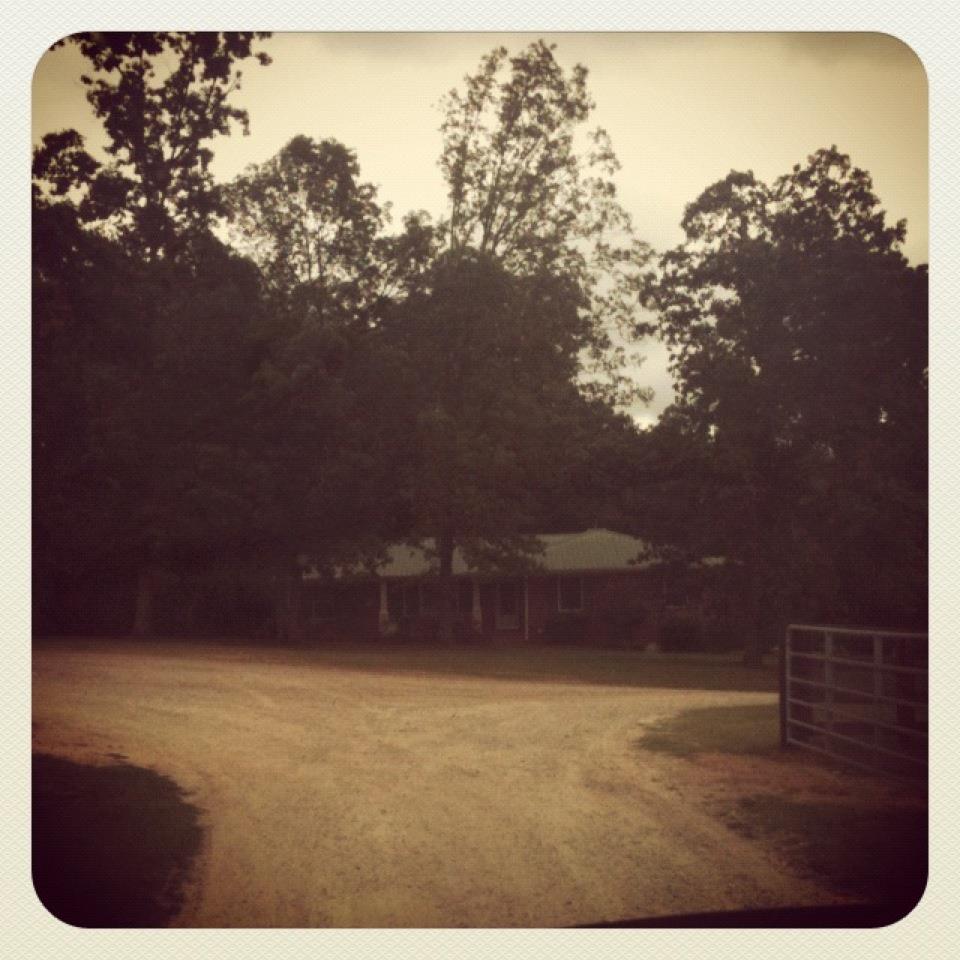
It came in the form of parents who refused to give up, who spent thousands of dollars they probably didn’t have on testing and therapy and specialists. It came in the form of a diagnosis that finally gave a name to the wall I’d been hitting. It came in the form of a strange little house where the classrooms used to be bedrooms, where the therapy room used to be a garage, where the teachers looked at broken kids and saw light.
Mrs. T, who wouldn’t let me quit. Mrs. A, who held boundaries with love. Mrs. McC, who gave me a future I didn’t know I wanted. And all the others—the ones whose names I carry quietly, whose voices I still hear when I push through something hard.
Hope Springs. That little school in Braselton, Georgia, shaped me into who I am.
I am a writer now.(well, kinda) I organize my thoughts well enough to put them on paper. I graduated early. I’ve succeeded at things I never could have imagined as that terrified child. I have a quiet house, a life I built, a brain that works with me instead of against me.
Not because I was fixed. Not because the “broken” parts were removed.
Because someone taught me that I was never broken in the first place.
To the Kids Who Feel Like I Did
If you’re reading this and you see yourself in these pages—the kid who can’t sit still, who can’t remember what they just read, who feels like they’re drowning while everyone else floats—I need you to hear something.
You’re not stupid. You’re not bad. You’re not broken.
Your brain just works differently. And there are people out there who understand that. There are tools that can help. There are schools—maybe a strange little house somewhere—where someone will look at you and see the light you’ve been hiding.
Hope springs eternal. Even for brains like ours.
Hope Springs guiding school scripture verse is Psalm 139:14,
“I will praise you for I am fearfully and wonderfully made.”
End of Part Two.
 Steadfast Sanity
Leave a comment